I Let My Friend Drive My 10-Year-Old Daughter to Summer Camp – A Few Hours Later, the Camp Administrator Called and Said, ‘I Think You Need to Come Here. It’s About the Man Who Brought Her’

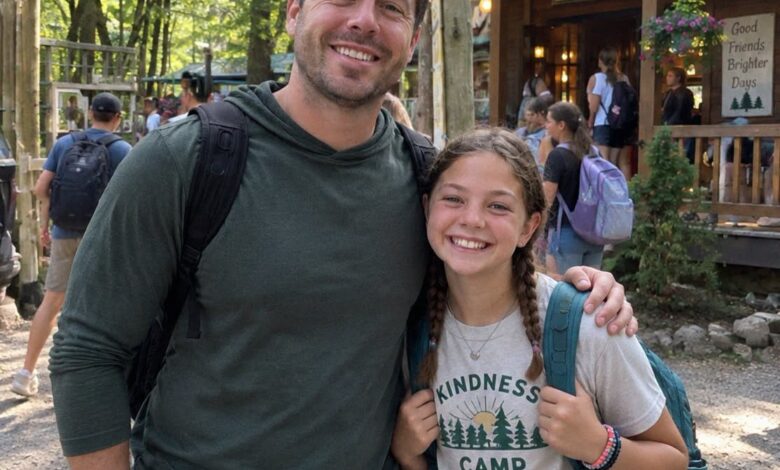
I’m a nurse and a single mom. For ten years, I’ve been the person my daughter Greta could always count on.
Greta was ten and had been excited about summer camp for months. But that week, something felt different.
One morning, she asked, “Mom, can parents pick kids up early if they feel sick?”
I asked if she was okay.
“No,” she said quietly. “I was just wondering.”
Then, the day before camp, she unpacked and repacked her bag twice. I assumed she was nervous.
That Saturday, the hospital called. Two nurses were sick, and they needed me to come in early. I couldn’t take Greta to camp myself.
Just then, my close friend Owen arrived.
“I’ll take her,” he said.
I trusted Owen completely. He had always been there for Greta when my shifts ran late.
About an hour later, he texted me:
“Greta’s checked in. She’s excited. Everything’s good.”
I relaxed and went to work.
Then, around noon, I received a call from the camp.
“Greta is safe,” the woman said, “but I need you to come here. It’s about the man who brought her.”
My hands went cold.
When I arrived, Owen was sitting beside Greta. Her eyes were red, and Owen looked terrified.
“What happened?” I asked.
The camp administrator explained that Owen had shown them messages suggesting Greta was being bullied by several girls from school. He had asked the staff to keep them separated and had told them not to call me yet.
Owen explained that Greta had begged him not to tell me because she knew I was already at work.
Then they showed me the messages.
The girls had been sending Greta cruel comments for weeks, telling her she wouldn’t belong at camp and that she couldn’t escape them.
I felt horrible. I suddenly remembered Greta saying she didn’t want to go.
I should have asked why.
But before I could process everything, another mother arrived.
She was furious.
“Have you seen what your daughter sent?” she asked.
She showed us a group chat.
Greta had taken an embarrassing photo of another girl and shared it with several classmates, adding a cruel caption.
My heart sank.
“Did you send this?” Owen asked.
Greta nodded.
“I knew you wouldn’t help me if you saw it,” she whispered.
Suddenly, the whole story became more complicated.
Greta had genuinely been bullied.
But she had also hurt someone else.
I told her that what happened to her was not her fault, but what she had done was still wrong.
Greta wanted to leave camp immediately.
“I just want to go home,” she said.
Part of me wanted to take her home too.
But I realized that would teach her the wrong lesson. She shouldn’t lose something she loved because she was afraid, but she also couldn’t avoid responsibility for what she had done.
We made a plan.
The girls would be separated. Camp staff would monitor the situation, and Greta would face consequences for sharing the photo.
Then I asked her one question:
“If those girls weren’t here, would you still want to stay?”
She hesitated.
“Yes.”
So I told her, “Then stay. But you have to own what you did.”
She nodded.
Later, I spoke privately with Owen.
“I’m glad she trusted you,” I told him. “But when you knew she was this scared, I needed to know too.”
He apologized.
“You can be someone Greta trusts,” I said, “but you can’t keep me in the dark when she needs help.”
He understood.
Two weeks later, I picked Greta up from camp.
She talked excitedly about canoeing, crafts, and everything she had done.
On the drive home, she suddenly became quiet.
“Mom?”
“Yeah?”
“I knew it was wrong. The picture. I was just tired of always being the one who got hurt. I wanted her to know what it felt like.”
I understood her anger, but I reminded her that anger didn’t make her choice right.
She looked at me and whispered:
“Next time, I’ll tell you.”
I reached over, squeezed her knee, and smiled.
“Good.”


