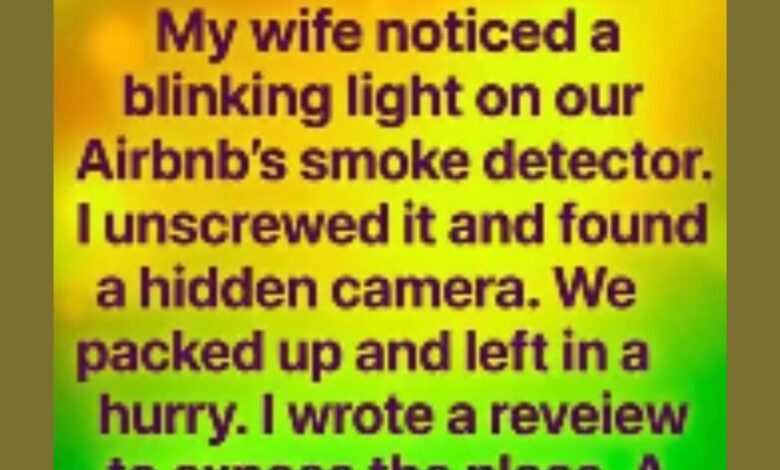
My wife noticed a blinking light on our Airbnb’s smoke detector. I unscrewed it and found what looked like a hidden camera. We packed up and left in a hurry. Feeling angry and violated, I immediately wrote a review warning others to stay away from the place.
A few minutes later, I got a reply:
“You fool, this is not what you think.”
The message only made me angrier. I assumed the owner was trying to cover up what we had discovered. I reported the listing and attached photos of the device. Then I waited.
The next day, Airbnb contacted me. They asked for additional pictures and requested permission to inspect the property. A few days later, the investigation was complete.
To my surprise, the device wasn’t a hidden camera at all.
It was a smart environmental sensor connected to the home’s security system. The small lens-like component I had seen was actually a motion detector designed to monitor smoke, temperature changes, and air quality. It had no recording capability whatsoever.
Embarrassed, I reread the owner’s message. He had been trying to explain, but I had blocked him before giving him the chance.
I called and apologized. The owner was understanding and even showed me the product manual and manufacturer’s documentation. He admitted that many guests had mistaken the device for a camera before.
I updated my review and explained the misunderstanding.
The experience taught me an important lesson: sometimes what looks suspicious at first glance isn’t evidence of wrongdoing. Taking a moment to verify the facts can save everyone a lot of stress and confusion.