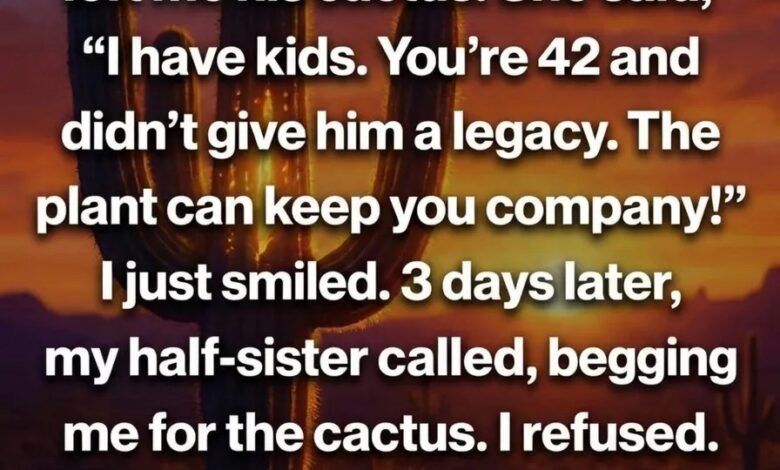
When my father died, grief came quietly, not all at once. At the will reading, everything felt routine—my half-sister received the house and savings, the visible results of a lifetime of work. Then the attorney turned to me and, after a pause, said my father had left me his cactus—the same one that had always sat by his window, leaning toward the light.
My half-sister laughed, brushing it off as insignificant. I said nothing. At 42, independent and capable, I took the cactus home carefully, as if it might break. That night, I placed it on the table and stared at it, realizing this simple plant had been a constant in my father’s life.
He wasn’t a man who expressed emotions easily. He showed love through routine, reliability, and quiet presence. The cactus reflected that—steady, undemanding, enduring. As days passed, I cared for it, noticing how little it needed to grow.
Later, my half-sister called and asked for it. I refused—not out of bitterness, but because it meant something personal. Weeks later, I found a sealed note hidden among its roots. In it, my father admitted his flaws and said he was proud of me. The cactus, he wrote, was never just a plant—it was a reminder that true value isn’t always obvious.