The next morning, my doorbell rang.
Standing outside were my brother, his wife, and my parents. They looked exhausted, their faces streaked with tears.
My brother spoke first.
“Please… forgive us. We need your help.”
I folded my arms.
“What changed overnight?”
He lowered his head.
“Nick confessed.”
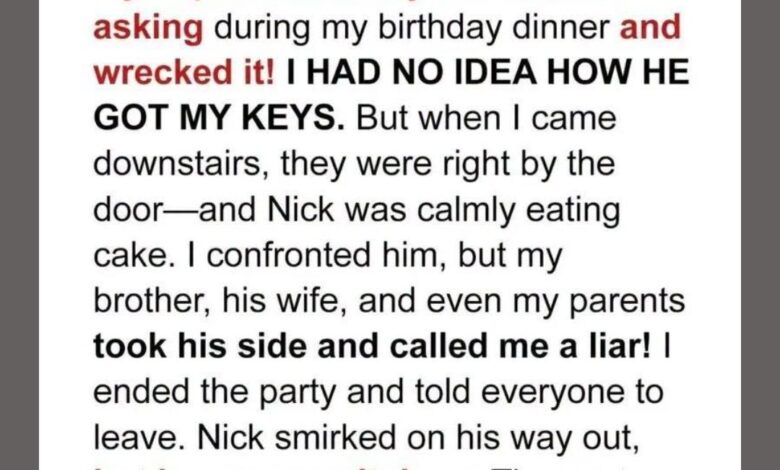
Apparently, after the accident, he had panicked. He’d secretly taken my spare keys from my coat pocket during the party, crashed my car while showing off to his friends, then sneaked back before anyone noticed. When I confronted him, he lied—and everyone believed him instead of me.
But the insurance company had reviewed nearby security footage. The video clearly showed Nick getting into my car and driving away.
Faced with undeniable evidence, he finally admitted everything.
My parents couldn’t even look me in the eyes.
“We should have trusted you,” my mother whispered.
The damage to my car was enormous, and because Nick was underage and uninsured, my brother became legally responsible for every repair.
Nick also lost his driver’s license before he had even properly earned it and was ordered to complete community service.
A week later, my brother handed me a check covering every penny of the repairs.
“I know money won’t fix what happened,” he said. “But I hope it’s a start.”
I accepted the check—but not the excuses.
Trust isn’t lost because someone makes a mistake.
It’s lost when the people who are supposed to know your character choose to believe a lie instead.
That birthday didn’t just cost me a car.
It showed me exactly who was willing to stand by me—and who wasn’t.